Buy consequences.eu ?
We are moving the project
consequences.eu .
Are you interested in purchasing the domain
consequences.eu ?
domain@kv-gmbh.de · 0541-91531010
Buy consequences.eu ?
What is an isometry with non-orthogonal vertices?
An isometry with non-orthogonal vertices is a transformation that preserves distances and angles between points, but the vertices are not at right angles to each other. This means that the shape is still congruent to its original form, but the angles between the edges are not necessarily 90 degrees. Isometries with non-orthogonal vertices can include translations, rotations, reflections, and glide reflections. These transformations are important in geometry and can help us understand the properties of shapes in different orientations. **
What is an isometry with non-orthogonal corners?
An isometry with non-orthogonal corners is a transformation that preserves distances and angles, but the corners of the shape are not at right angles to each other. This means that the shape is still congruent to its original form after the transformation, but the angles at the corners are not 90 degrees. Isometries with non-orthogonal corners can include rotations, reflections, translations, and glide reflections. These transformations are important in geometry and can be used to study the properties of shapes and figures. **

Similar search terms for Non-orthogonal
Top-Angebote
Products related to Non-orthogonal:
-
Galerie Wallcoverings Boutique Weave Effect Non-woven Shimmery Wallpaper RollA subtly textured, realistic, linen style weave. Specially designed for homeowners looking to embrace a love of colour, texture and pattern on their walls, this eye-catching homely wallpaper brings a modern twist to any space.184,26 $*Shipping: 0,00 $Secure redirect to the provider
-
Uplifted Finds Non Slip Shockproof Magnetic Phillips Impact Screwdriver Bits 150 MmInaugurate a direct energy for your environment with this integrated mechanical solution. This magnetic Phillips impact bit set serves as a functional choice for your technical maintenance journeys, offering a hightorque alternative to standard...37,97 $*Shipping: 0,00 $Secure redirect to the provider
-
Galerie Wallcoverings Atmosphere Metallic Linen Effect Non-woven Metallic Wallpaper RollFluidity and softness in design are the inspiration for the Atmosphere wallpaper collection. Beautifully blurred lines and an on-trend color palette make this the perfect addition to interior schemes both new and old.151,96 $*Shipping: 0,00 $Secure redirect to the provider


-
What is an orthogonal vector?
An orthogonal vector is a vector that is perpendicular to another vector. In other words, two vectors are orthogonal if their dot product is zero. Geometrically, this means that the two vectors form a 90-degree angle with each other. Orthogonal vectors are important in many areas of mathematics and physics, including linear algebra and vector calculus. **
-
What does the term orthogonal mean?
The term orthogonal refers to two things being perpendicular or at right angles to each other. In mathematics, it often refers to vectors or matrices that are perpendicular to each other. In a broader sense, it can also refer to any two things that are independent or unrelated to each other. **
-
When are planes and lines orthogonal?
Planes and lines are orthogonal when the line is perpendicular to the plane. This means that the line forms a 90-degree angle with the plane, creating a right angle. In other words, the direction of the line is perpendicular to the direction of the plane. This relationship is important in geometry and engineering, as it affects the intersection and orientation of different geometric elements. **
-
Are linearly independent vectors always orthogonal?
No, linearly independent vectors are not always orthogonal. Linear independence means that no vector in the set can be written as a linear combination of the others, while orthogonality means that the vectors are perpendicular to each other. It is possible for linearly independent vectors to be orthogonal, but it is not a guarantee. For example, in three-dimensional space, the vectors (1, 0, 0), (0, 1, 0), and (0, 0, 1) are linearly independent and orthogonal, but the vectors (1, 1, 0) and (0, 1, 1) are linearly independent but not orthogonal. **

What is a proof of two orthogonal?
Two vectors are considered orthogonal if their dot product is equal to zero. This means that the angle between the two vectors is 90 degrees, forming a right angle. Mathematically, if vectors u and v are orthogonal, then u · v = 0. This property can be used to prove that two vectors are orthogonal by calculating their dot product and showing that it equals zero. **
How do you determine the orthogonal complement?
To determine the orthogonal complement of a subspace, you first need to find a basis for the subspace. Then, you can use the Gram-Schmidt process to find an orthogonal basis for the subspace. Finally, the orthogonal complement is the set of all vectors in the vector space that are orthogonal to every vector in the basis of the subspace. **
Top-Angebote
Products related to Non-orthogonal:
-
Uplift Essentials Magnetic Impact Screwdriver Bit Set With Non Slip Design Magnetic Impact Screwdriver Bit Set With Non Slip DesignUpgrade your toolkit with these high hardness magnetic screwdriver bits designed for impact resistance, precision, and longlasting durability. Perfect for woodworking, DIY home repairs, furniture assembly, and power tool use, these bits deliver...34,97 $*Shipping: 0,00 $Secure redirect to the provider
-
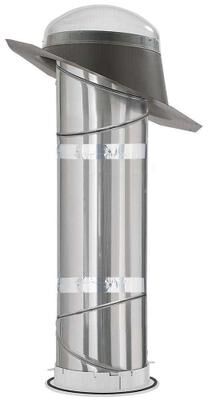
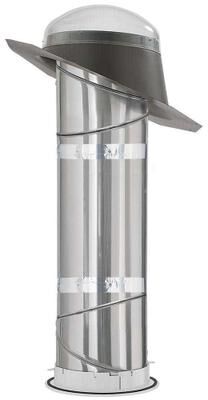
Velux TMR Sun Tunnel Residential Tubular Rigid Skylight Pitched 10 Inch Non-Impact Non-Energy EfficientThe Velux TMR Rigid Sun Tunnel Skylight is a powerful daylighting solution designed to bring natural light into areas of your home where traditional skylights may not be practical. Ideal for hallways bathrooms closets and other interior spaces the...322,74 $*Shipping: 0,00 $Secure redirect to the provider
-
Galerie Wallcoverings Boutique Weave Effect Non-woven Shimmery Wallpaper RollA subtly textured, realistic, linen style weave. Specially designed for homeowners looking to embrace a love of colour, texture and pattern on their walls, this eye-catching homely wallpaper brings a modern twist to any space.184,26 $*Shipping: 0,00 $Secure redirect to the provider
-
What is an isometry with non-orthogonal vertices?
An isometry with non-orthogonal vertices is a transformation that preserves distances and angles between points, but the vertices are not at right angles to each other. This means that the shape is still congruent to its original form, but the angles between the edges are not necessarily 90 degrees. Isometries with non-orthogonal vertices can include translations, rotations, reflections, and glide reflections. These transformations are important in geometry and can help us understand the properties of shapes in different orientations. **
-
What is an isometry with non-orthogonal corners?
An isometry with non-orthogonal corners is a transformation that preserves distances and angles, but the corners of the shape are not at right angles to each other. This means that the shape is still congruent to its original form after the transformation, but the angles at the corners are not 90 degrees. Isometries with non-orthogonal corners can include rotations, reflections, translations, and glide reflections. These transformations are important in geometry and can be used to study the properties of shapes and figures. **
-
What is an orthogonal vector?
An orthogonal vector is a vector that is perpendicular to another vector. In other words, two vectors are orthogonal if their dot product is zero. Geometrically, this means that the two vectors form a 90-degree angle with each other. Orthogonal vectors are important in many areas of mathematics and physics, including linear algebra and vector calculus. **
-
What does the term orthogonal mean?
The term orthogonal refers to two things being perpendicular or at right angles to each other. In mathematics, it often refers to vectors or matrices that are perpendicular to each other. In a broader sense, it can also refer to any two things that are independent or unrelated to each other. **
Similar search terms for Non-orthogonal
-
Uplifted Finds Non Slip Shockproof Magnetic Phillips Impact Screwdriver Bits 150 MmInaugurate a direct energy for your environment with this integrated mechanical solution. This magnetic Phillips impact bit set serves as a functional choice for your technical maintenance journeys, offering a hightorque alternative to standard...37,97 $*Shipping: 0,00 $Secure redirect to the provider
-
Galerie Wallcoverings Atmosphere Metallic Linen Effect Non-woven Metallic Wallpaper RollFluidity and softness in design are the inspiration for the Atmosphere wallpaper collection. Beautifully blurred lines and an on-trend color palette make this the perfect addition to interior schemes both new and old.151,96 $*Shipping: 0,00 $Secure redirect to the provider
-
Galerie Wallcoverings Hotel Plain Texture Effect Non-woven Glitter Wallpaper RollThis wallpaper is the perfect choice if you want to bring a room up to date in an understated way. With a subtle luster to catch the light, it comes in on-trend colors.263,74 $*Shipping: 0,00 $Secure redirect to the provider
-
Velux TMR Sun Tunnel Residential Tubular Rigid Skylight Pitched 14 Inch Non-Impact Non-Energy EfficientThe Velux TMR Rigid Sun Tunnel Skylight is a powerful daylighting solution designed to bring natural light into areas of your home where traditional skylights may not be practical. Ideal for hallways bathrooms closets and other interior spaces the...466,29 $*Shipping: 0,00 $Secure redirect to the provider
-
When are planes and lines orthogonal?
Planes and lines are orthogonal when the line is perpendicular to the plane. This means that the line forms a 90-degree angle with the plane, creating a right angle. In other words, the direction of the line is perpendicular to the direction of the plane. This relationship is important in geometry and engineering, as it affects the intersection and orientation of different geometric elements. **
-
Are linearly independent vectors always orthogonal?
No, linearly independent vectors are not always orthogonal. Linear independence means that no vector in the set can be written as a linear combination of the others, while orthogonality means that the vectors are perpendicular to each other. It is possible for linearly independent vectors to be orthogonal, but it is not a guarantee. For example, in three-dimensional space, the vectors (1, 0, 0), (0, 1, 0), and (0, 0, 1) are linearly independent and orthogonal, but the vectors (1, 1, 0) and (0, 1, 1) are linearly independent but not orthogonal. **
-
What is a proof of two orthogonal?
Two vectors are considered orthogonal if their dot product is equal to zero. This means that the angle between the two vectors is 90 degrees, forming a right angle. Mathematically, if vectors u and v are orthogonal, then u · v = 0. This property can be used to prove that two vectors are orthogonal by calculating their dot product and showing that it equals zero. **
-
How do you determine the orthogonal complement?
To determine the orthogonal complement of a subspace, you first need to find a basis for the subspace. Then, you can use the Gram-Schmidt process to find an orthogonal basis for the subspace. Finally, the orthogonal complement is the set of all vectors in the vector space that are orthogonal to every vector in the basis of the subspace. **
* All prices are inclusive of VAT and, if applicable, plus shipping costs. The offer information is based on the details provided by the respective shop and is updated through automated processes. Real-time updates do not occur, so deviations can occur in individual cases. ** Note: Parts of this content were created by AI.